Personal
Return to XOR Neural Network in C++
Revisiting and improving my custom neural network training a 3-input XOR gate project.

Tech: C++
Key Work:
- Refactored original project using C++ best practices
- Redesigned the data structures to optimise memory usage
- Improved performance over original implementation
Blog Post: https://ezramason.com/2025/03/30/return-to-c-xor-neural-network/
Source: https://github.com/Ezra-Mason/XOR-gate-neural-network/
XOR Neural Network in C++
A remake of a university project for my Modern Computational Techniques module, involving training a neural network of my design to produce the behaviour of a 3-input XOR gate.
Tech: C++
Key Work:
- Rewrite original Fortran assignment in C++
Blog Post: https://ezramason.com/2021/03/17/neural-network-in-c/
Ez-Utils
Custom reusable Unity utilities package, designed for use with Git submodules, containing core game jam features and tooling to aid rapid development.
Tech: C#, Unity, Git
Key Work:
- Abstract common gameplay systems into reusable helper classes
- Structured utilities into modular namespaces for scalability
- Implement ScriptableObject-based variable system
- Built spring motion utilities using 3D math knowledge
- Created object pooling system using advanced C# features
- Developed SceneReference objects to overcome editor serialization limitations
Blog Post: https://ezramason.com/2025/03/19/ez-utils-unity-game-dev-made-easy/
Jam Games
Xanadu
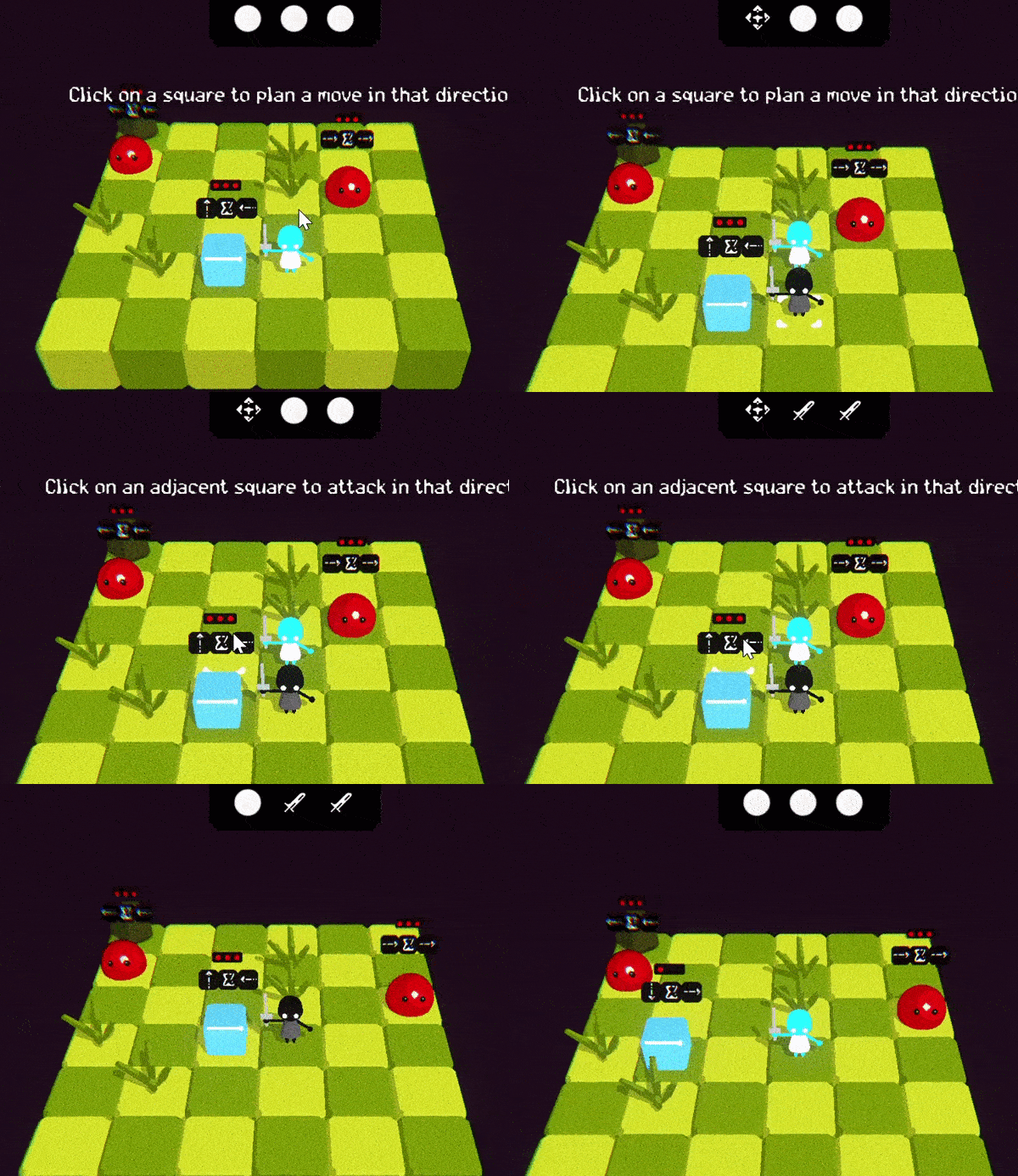
Grid-based strategy roguelike created with Unity in a week for the 7DRL game jam.
Tech: Unity, C#, Blender
Key Work:
- Designed and implemented unique “oracle” tactics gameplay
- Leveraged command design pattern for user and AI actions
- Balance random generation of levels and enemies
Fall
3D arcade game about raking the leaves from your Gnome Home, with aesthetic influence from A Short Hike. Created for the Great Autumn Game Jam 2021.

Tech: Unity, C#, Blender
Key Work:
- Implemented and balanced wave-based leaf dropping system
- Built two bone Inverse Kinematic leg animation
- Used cinemachine to replicate visual style of A Short Hike
Outcome: 10th out of 167 games
Numb Skull
Smack your bouncy skull through an obstacle filled dungeon in this 3D action puzzler, with aesthetics and gameplay inspired by A Short Hike. Created for the Brackeys Game Jam 2021.2 for the theme Let There Be Chaos.

Tech: Unity, C#, HLSL, Blender
Key Work:
- Design and implement my first 3D character movement
- Create responsive physics-based ball gameplay
- Build custom shaders to complement the desired art style
Outcome: placed 54th out of 1,741 games
HADRON
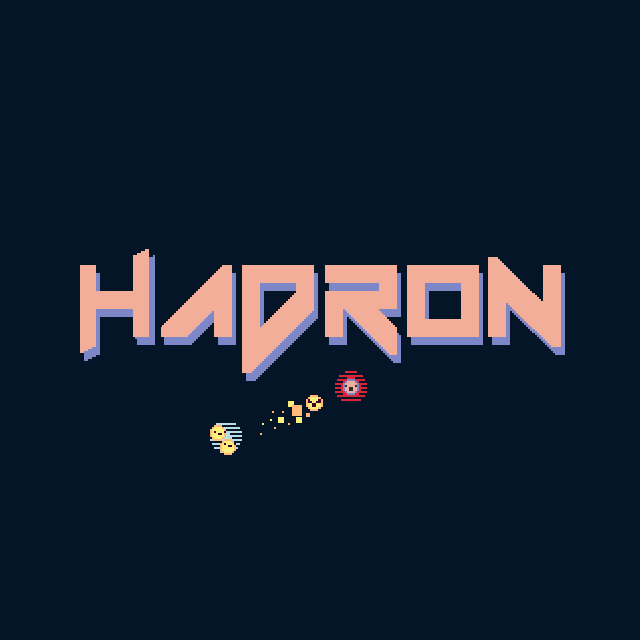
Fight a bombardment of particles as a lonely hadron made up of three quarks. Each acts as your bullets and fuel your powerful dash but you can’t last long without them! Created in a week for the Brackeys Game Jam 2021.1.
Tech: Unity, C#, Aesprite
Key Work:
- Designed and built resource-based combat system
- Created responsive player movement and combat actions
- Implemented state machine enemy behaviour
- Balanced level difficulty and systems under time pressure
Outcome: placed 2nd overall out of 1890 entries
Blog Post: https://ezramason.com/2021/03/05/hadron/
Chimney
Santa drops down chimneys in this Downwell inspired arcade game centered around procedurally generated levels. Created in a month for the Great Winter Game Jam.

Tech: Unity, C#, Aesprite
Key Work:
- Built physics-based player controller with responsive controls
- Designed and balanced a subtle procedural level generation system
- Implemented persistent high score tracking
Another Planet
A puzzle game made in Unity focuses on flinging a moon through the dangers of space to find a new home planet. Made for the Beginner Circle #3 jam.

Tech: Unity, C#, Aesprite, Bosca Ceoil
Key Work:
- Implemented physics-based Angry Birds style “ping”
- Designed planet gravity physics with tooling for rapid prototyping
- Balanced smooth puzzle progression using escalating mechanics
- Prototyped simple bit-tune music under strict time constraint
MXT – Programmer
Stonehenge VR Visualisation
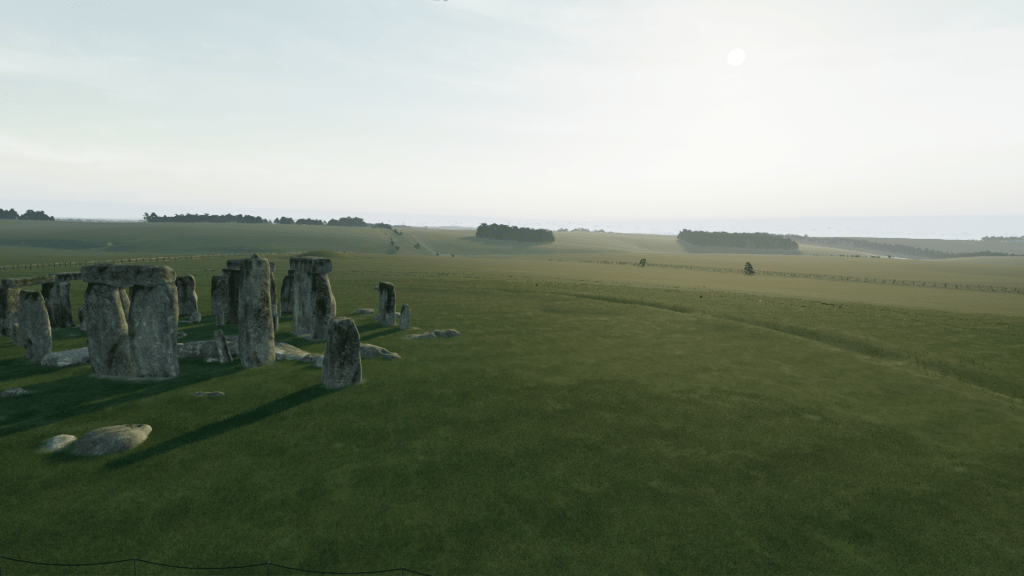
Large-scale immersive VR experience of the Stonehenge world heritage site created using real-world data, including environmental variants and dynamic time of day.
Tech: Unreal Engine (UE4/UE5), C++, VR, Python
Key Work:
- Implemented a dynamic environment streaming system using World Composition to handle free roaming in the 22km2 landscape within runtime VR performance budget and allowing instant teleporting to any location.
- Created system for instantly transitioning between current and future environment variants.
- Built seasonal configuration system for midday in summer and during the winter solstice.
- Developed artist tools including UMG widgets for time of day switching and scripted actions for artists to easily duplicate and move assets between environment variants.
- Created traffic rendering system for over 1200 vehicles, leveraging C++ and Hierarchical Instanced StaticMeshes to maintain performance on VR headsets.
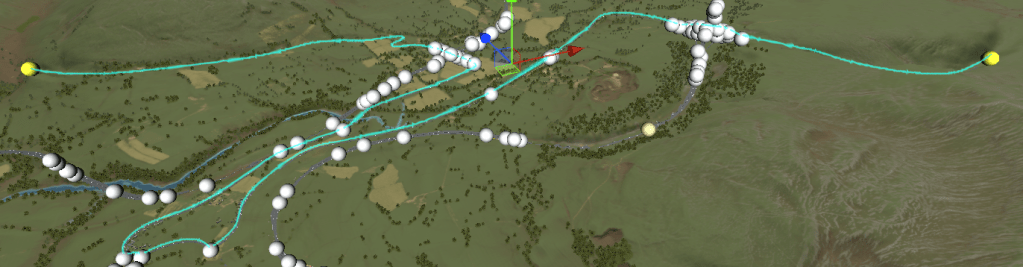
- Scripted a Python pipeline to parsing PT Vissim 2D traffic data into Unreal and C++ tooling to calculate vehicle height data from the environment.
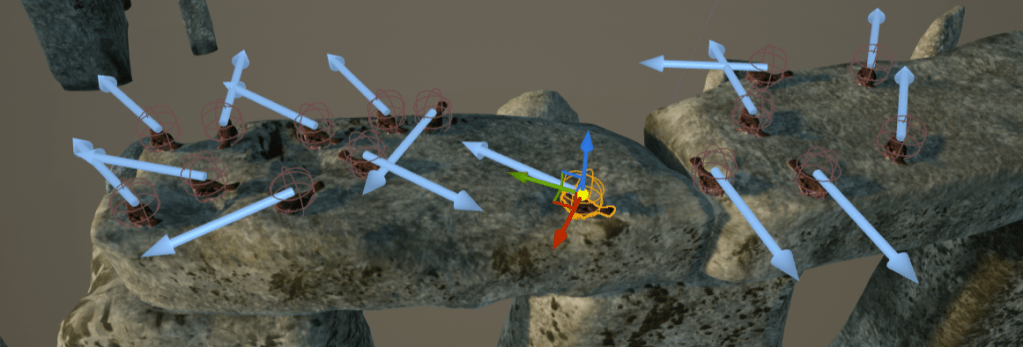
- Built a custom C++ fence tool allowing artists to quickly place, generate and customise fencing with spline handles. This utilised Hierarchical Instanced StaticMeshes to reduce the impact on draw calls from the quantity of fencing in the levels.
- Developed tools to easily isolate gameplay features and environment assets to gather rapid performance insights when optimising.
- Implemented animal AI movement, behaviour and animations for sheep, cows and crows using Behaviour Trees and NavMesh.
- Designed custom flocking behaviour in Blueprints for starling murmuration system, including periodic roosting on the monuments.

Driving Simulator
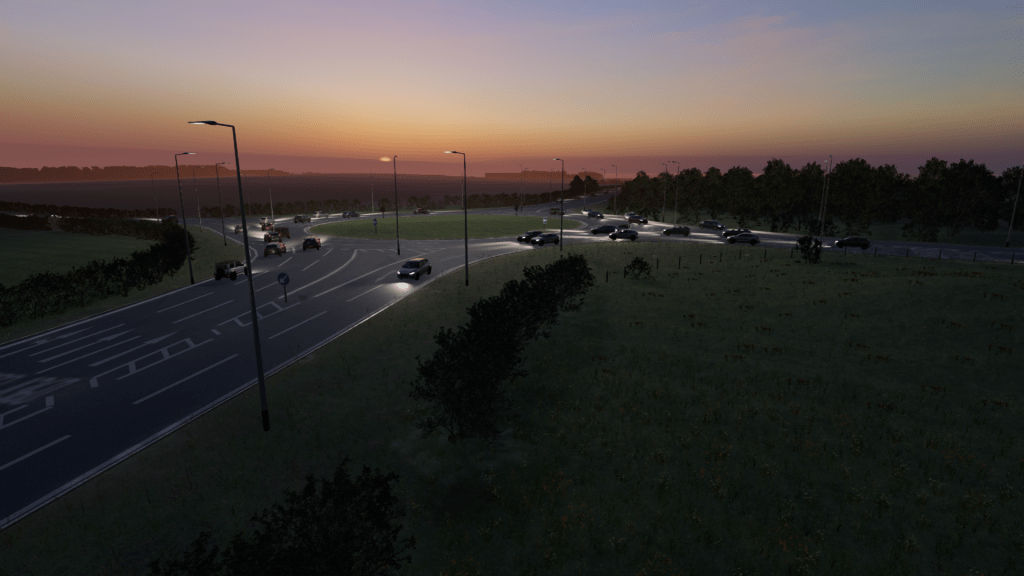
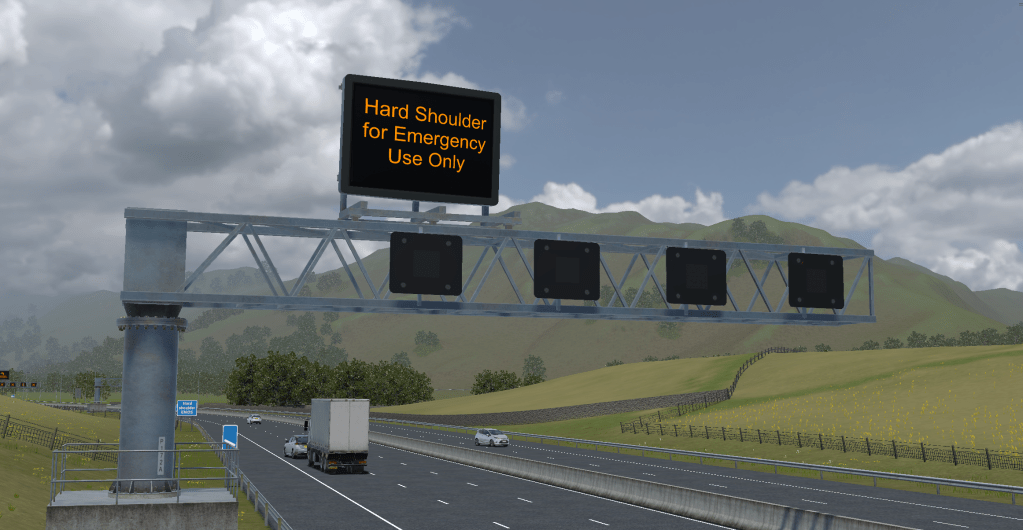
A simulator with an immersive driving experience created within Unity involving a Mixed Reality experience with a headset and motion rig. Alongside this driver experience is a real-time traffic simulation using SUMO. This setup, along with our analytics suite, allows us to study driver behaviour and biometric data in a broad range of scenarios.
Tech: Unity, C#, Python, SUMO, Varjo VR, Mixed-Reality, ForceSeatMI
Key Work:
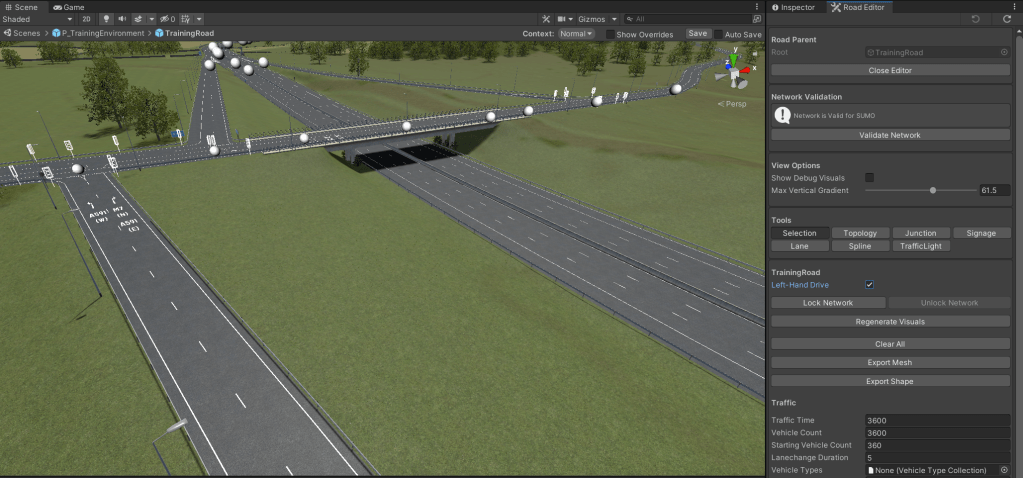
- Primary maintainer and developer of Unity editor tool for procedural road generation with SUMO traffic integration.
- Implemented history system with undo/redo actions using command design pattern.
- Created custom XML serialization of road network asset data, leveraging C# custom attributes to improve developer workflow.
- Built efficient traffic routing using Breadth-First Search algorithm for road editor tool SUMO integration.
- Developed Python-based SUMO server integrated with Unity visualisation using multi-threaded C# code with Unity Jobs.
- Designed and built real-time dynamic traffic signals, adding networked code to update the SUMO simulation and synchronise game state.
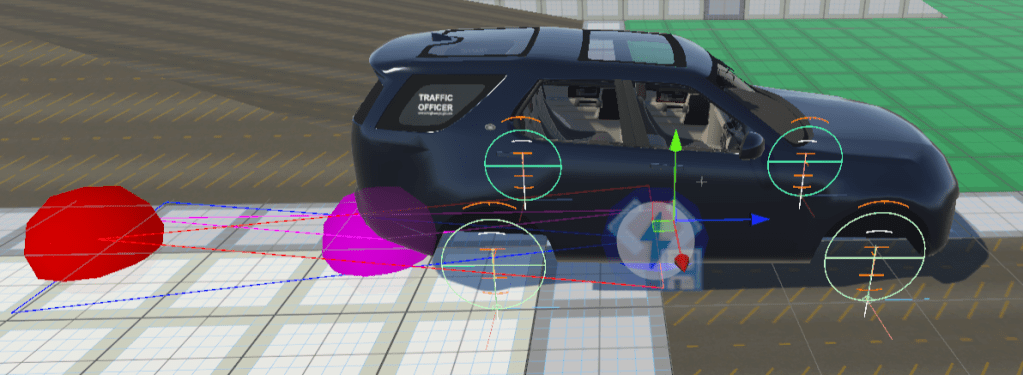
- Integrated Unity physics with motion rig using ForceSeatMI API.
- Improved gameplay realism by creating engine vibration and force feedback system for the motion rig.
- Implemented safety systems to prevent unsafe simulated driver motion from wheel contact, extreme forces or collisions.



 Ez Mason